

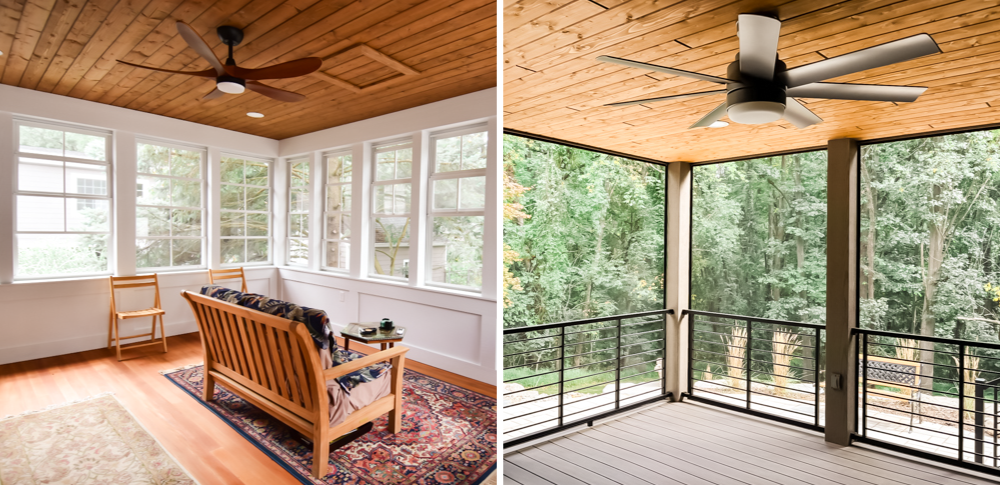
Screened Porch, Three-Season Room, or Four-Season Room: Which One Is Right for Your Michigan Home?
Highlights from this article:
- Screened porches give you fresh air and bug-free, rain-free outdoor living at the most accessible price point.
- Three-season rooms add windows and insulation for comfortable use through spring, summer, and fall.
- Four-season rooms are fully climate-controlled additions you can enjoy year-round, even midwinter in the Mitten State.
- The right choice depends on how you want to use the space and what you're willing to invest.
~Skip down to the quick comparison table or the FAQ's.~
As you start researching porches, screened rooms and sunroom additions, the terminology can get confusing fast. What exactly is the difference between a screened porch and a three-season room? Is a four-season room just a fancy sunroom? And which one actually makes sense for your home, your family, and your budget?
Let's walk through each option clearly so you can make a confident, informed decision.
Screened Porches: Fresh Air Without the Bugs and Direct Sunlight
A screened porch is an outdoor living space enclosed with a roof and screen panels — like Screeneze Screen Systems, for example — set within a structural frame. It keeps insects out while letting in breezes, natural light, and the sights and sounds of your yard. It typically includes a ceiling fan, but no other climate control.
Many screened porches are essentially covered decks that shield you from direct summer sun, rain and bugs.
What makes a screened porch special is that it keeps you connected to the outdoors. You hear and smell the rain. You feel the evening air. You watch the seasons change from a comfortable chair. For many families, this authentic connection to the outside is exactly what they're after, and no amount of glass can replicate it.
Best for:
- Homeowners who love the feel of being outside but want a deck area with relief from insects and direct sunlight
- Families who want an affordable outdoor living upgrade
- Outdoor hospitality and dining in summer without concern for rain
- Yards with beautiful natural settings worth staying connected to
- Late spring, summer and early fall use in Michigan's climate
What to know about Screened Rooms:
Screened porches are generally the most budget-friendly of the three options. They don't require HVAC systems, electrical heating, or the heavy insulation that enclosed rooms demand. On very hot summer days or cold fall evenings, comfort depends on the weather — there's no climate control. And in Michigan, screened porches typically are not used during the winter months.
Some screened porches employ floor-to-ceiling screens all around. Others are designed with knee walls. A knee wall is a short solid wall — typically two to three feet high — that runs along the base of the porch enclosure before the screen begins above it. Knee walls block some wind and blowing rain at ground level, adding a measure of weather protection that floor-to-ceiling screening doesn't provide. Knee walls don't substitute for windows or insulation, but they can make a real difference on blustery days.
The floor beneath your screened porch also matters more than many homeowners expect. A ground-level porch can sit on a solid cement slab foundation, which does a reasonable job of retaining some warmth and providing a seamless, solid feel underfoot. Raised porches, however, are often built on a typical composite decking floor — and because composite deck boards have small gaps between them, cold air moves through more freely from below. One option is to go for tongue-and-groove composite porch planks (like these TimberTech porch planks), which combine the longevity of composite with a more seamless barrier to bugs and the elements.
Three-Season Rooms: The Sweet Spot for Most Families
A three-season room takes the screened porch concept a step further by replacing screen panels with windows — usually single-pane glass or vinyl-framed windows that open and close. The result is a space that stays comfortable through a much wider range of temperatures, shielding you from wind, rain, and the chill of early spring or late autumn evenings.
Think of it as a room that lives between indoors and outdoors. You're protected from the elements, but the space isn't tied into your home's heating or cooling. You might use a ceiling fan or infrared heaters in this area. On a crisp October afternoon in Ann Arbor — the kind where the maples are turning and the air smells like leaves — a three-season room is an extraordinarily pleasant place to be.
Best for:
- Homeowners who want to extend their outdoor living season significantly
- Families who enjoy the transition seasons (spring and fall) as much as summer
- Those who want more weather protection than a screened porch without the full investment of a four-season addition
- Homeowners who plan to use the space for dining, reading, or relaxing — not as a primary living area
What to know about Three-Season Rooms:
Three-season rooms aren't designed for Michigan winters, and they don't tie into your home's central HVAC system. But that doesn't mean you're limited to whatever temperature the weather provides. Supplemental heaters work well in these spaces — infrared heaters in particular are a popular choice. A well-placed infrared heater can meaningfully extend your comfortable season into colder fall evenings. Many families find this a perfectly reasonable trade-off: They use the room from roughly April through October and consider it an outdoor space that's simply more protected.
Three-season rooms typically cost more than screened porches but less than full four-season additions.
Four-Season Rooms: A True Room Addition
A four-season room — sometimes called an all-season room — is a fully conditioned living space. It's insulated to the same standard as the rest of your home, connected to your HVAC system (or equipped with its own), and designed to be comfortable in January just as much as July.
This is a genuine addition to your home's living square footage. Families use four-season rooms as dining/entertainment rooms, home offices, playrooms, craft or art spaces, reading rooms, and informal living areas. Many install gas fireplaces to create an even more cozy, "Up North," cabin-like feel. The abundant natural light that defines these spaces makes them feel uplifting year-round — especially during Michigan's gray winter months when sunlight feels like a gift.
Best for:
- Homeowners who want a year-round living space with abundant natural light
- Families who want more functional square footage for their home
- Those looking to increase their home's resale value
- Anyone who finds Michigan winters long and wants a bright, warm, at-home retreat
What to know about Four-Season Rooms:
Four-season rooms represent a more significant investment than screened porches or three-season rooms. They require proper insulation and climate control, all of which add to the build cost. They often feature special design elements like tile or luxury vinyl plank flooring, pine shiplap like Woodtone or tongue-and-groove cedar ceilings, and built-in gas fireplaces. Because they function as true living spaces, they also add meaningfully to your home's appraised value. If you're planning to stay in your home for years to come, you'll find the investment more than worthwhile.
How They Compare at a Glance
| Screened Porch | Three-Season Room | Four-Season Room | |
|---|---|---|---|
| Usable Season | Spring–Fall | Spring–Fall (extended) | Year-round |
| Climate Control | None | None | Full heat \& AC |
| Connection to Outdoors | High — open air feel | Moderate | Lower — fully enclosed |
| Relative Cost | $ | $$ | $$$ |
| Adds to Home Value | Yes | Yes | Yes (most significantly) |
| Best Use | Relaxing, dining al fresco | Dining, reading, entertaining | Living, working, year-round family space |
So Which One Is Right for You?
Here's a simple way to think through the decision:
Choose a screened porch if you love the feeling of being outside in the summer, and you want to preserve that connection to your yard and the natural world around it. If your primary frustration is insects or rain rather than cold weather, a screened porch delivers tremendous value at a more accessible price.
Choose a three-season room if you want to extend your outdoor living season meaningfully — catching those gorgeous Ann Arbor spring and fall days — without committing to a full home addition. It's the choice that makes the most sense for families who think of the space primarily as an outdoor retreat with weather protection.
Choose a four-season room if you want a room, not just a porch. If you're imagining morning coffee in February with snow on the ground, a home office bathed in natural light, or a playroom your kids will actually use all year — a four-season room is built for that.
Frequently Asked Questions
What's the most popular choice for Ann Arbor homeowners: screened porch, three-season room, or four-season room?
Screened porches and three-season rooms are both very popular in Washtenaw County, largely because Michigan's spring and fall seasons are so beautiful. Both options let you enjoy them comfortably. Four-season rooms appeal most to families who want true year-round living space and are ready to invest in a full home addition.
Can I convert a screened porch into a three-season or four-season room later?
Sometimes, yes, but it depends heavily on how the original structure was built. A screened porch that was designed with future enclosure in mind (adequate footings, proper framing) may be a reasonable candidate for conversion. One not originally designed for it often requires significant structural work. It's worth discussing your long-term vision with your contractor before you build, so the initial structure doesn't close doors later.
Can I convert my existing deck into a screened porch?
The answer almost every time is "no," unfortunately. We must be sure that the structure will be safe and will stand the test of time, so we will demolish your existing deck and build a new room for you that's engineered to last. Most decks have footings, posts and beams that are inadequate to bear the weight of walls, ceiling and roof. Screened porches require building permits, plan drawings with footing/structural details, and careful inspection. We take our role as contractor very seriously, so we need to vouch for every footing and structural detail from the bottom up.
How much warmer does a three-season room stay compared to a screened porch on a cold fall evening?
Quite a bit warmer — closed windows eliminate wind chill and block the cold air that flows freely through screens. Add a supplemental infrared heater and you can comfortably extend your season well into October and November in Michigan. That said, a three-season room will still track toward outdoor temperatures on very cold days.
Do four-season rooms add to my home's resale value?
Generally speaking yes, and more significantly than screened porches or three-season rooms. Because a four-season room functions as true conditioned living space, it typically counts toward your home's finished square footage, which directly affects appraised value. The actual return on investment varies by market, of course.
What's the difference between a four-season room and a sunroom?
The terms are often used interchangeably, but there's a meaningful distinction. A true four-season room is fully insulated and climate-controlled to the same standard as the rest of your home. "Sunroom" is a looser term that sometimes describes spaces that are enclosed and light-filled but not fully insulated. Sunrooms often feature floor-to-ceiling glass on three sides. When you're getting quotes, it's worth asking contractors exactly what insulation, glazing, and climate control is included.
Let's Talk Through Your Vision
At Ann Arbor Decks, we've helped Washtenaw County families build screened porches, three-season rooms, and four-season additions since 2006. We know how Michigan's climate shapes these decisions, and we love helping homeowners think through not just what they can build, but what will genuinely improve their daily life.
Our on-site consultations take just 45 to 60 minutes. We'll visit your home, listen to how you want to use the space, and give you a clear, honest picture of your options.