

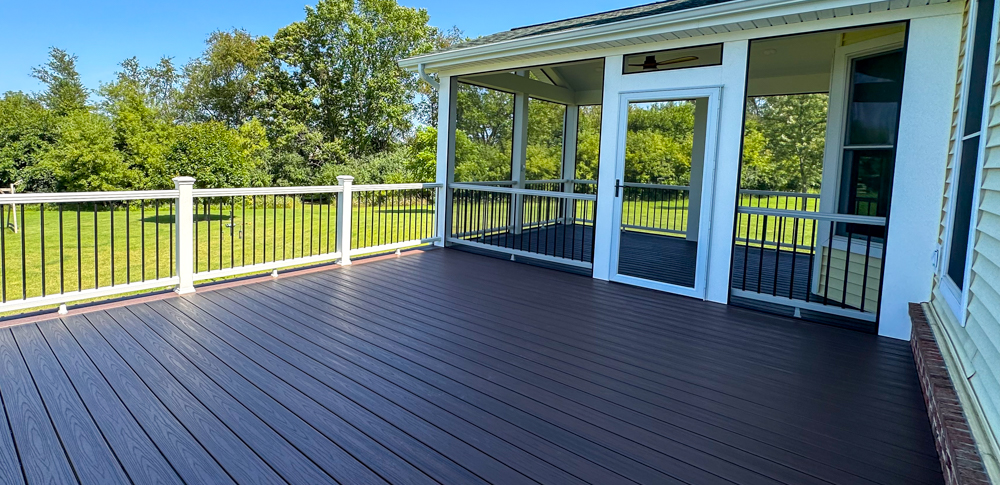
Spring Deck Cleaning: Tips & Tricks to Make It Easy…er
Highlights from this Article:
- Wood and composite decks have genuinely different cleaning needs. It’s important to use the correct method so you avoid scratches or damage.
- Spring cleaning is also your best opportunity to catch soft spots, rot, and loose fasteners before they become expensive repairs.
- Pressure washing is fine for both deck types at low settings (1,500 PSI or below) with a fan-tip nozzle, but technique matters.
- Wood decks need to be stained or sealed after cleaning. Composite decks don’t. Once clean, they’re ready for the season.
- Shady yards common in Ann Arbor are more prone to mildew on composite surfaces; treat it promptly with a manufacturer-approved cleaner.
Skip down to the FAQs or the Composite Deck Cleaning section.
Every spring, it’s the same story. The snow melts, the days get longer, and you walk out to your back deck for the first time in months, only to find a winter’s worth of grime, leaf debris, and weathering staring back at you. Before you fire up the grill and pull out the patio furniture, your deck deserves a proper cleaning.
The good news: it’s not as hard as it looks. With the right approach and a few hours on a mild spring day, you can have your deck looking renewed and ready for the season ahead. The key is knowing what your deck is made of, because wood and composite decks have genuinely different needs, and using the wrong method on either one can cause more harm than good.
Cleaning a Wood Deck
Wood decks reward careful attention. When you clean yours thoughtfully each spring, you’re not just improving its appearance. You’re extending its life and setting it up for a successful staining or sealing season.
What You’ll Need
- A stiff-bristle brush (avoid wire brushes, which can damage wood fibers)
- A garden hose or pressure washer (more on pressure washing below)
- A dedicated wood deck cleaner or a DIY solution of warm water, dish soap, and white vinegar
- Rubber gloves and eye protection
- A putty knife or paint scraper for stubborn debris
Step-by-Step
Start with a thorough sweep. Before any water touches your deck, sweep away leaves, dirt, and debris, paying special attention to the gaps between boards. Debris trapped in those gaps holds moisture against the wood, which accelerates decay. A putty knife works well for clearing packed-in material.
Inspect as you go. Spring cleaning is the perfect time to look for soft spots, cracked boards, loose fasteners, or signs of rot. Catching these issues early means a simple repair instead of a costly replacement. Press a screwdriver gently into the wood in a few places. If it sinks easily, that board may need attention.
Apply your cleaner. Wet the deck surface with your hose first, then apply your wood deck cleaner according to the product instructions. A quality deck cleaner will break down mildew, algae, and gray weathering. Let it dwell for the recommended time; don’t let it dry on the surface.
Scrub with the grain. Using your stiff-bristle brush, scrub the cleaner into the wood with the grain, not against it. This lifts embedded dirt without roughing up the wood fibers.
Rinse thoroughly. Rinse the entire surface completely, working the water into the gaps between boards. Leftover cleaner residue can interfere with staining or sealing later.
A Word on Pressure Washing Wood
Pressure washing a wood deck is effective but requires care. Keep the pressure at or below 1,500 PSI, use a fan-tip nozzle (never a pinpoint jet), and maintain a consistent distance of at least 12 inches from the surface. Too much pressure can raise the wood grain, leaving the surface fuzzy and actually making it harder to seal properly. When in doubt, a lower setting and a scrub brush will get you there safely.
Don’t Skip the Staining Step
Once your wood deck is clean and fully dry (typically 48 to 72 hours after washing), it’s ready for staining or sealing. This step isn’t optional if you want your deck to hold up through another Michigan year. A quality penetrating stain or sealant protects against moisture, UV damage, and the cycle of freezing and thawing that takes a real toll on untreated wood.
Cleaning a Composite Deck
Here’s the good news composite deck owners have been waiting for: cleaning your deck is significantly easier than cleaning a wood deck. Composite materials don’t absorb moisture, won’t rot, and resist mold and mildew far better than natural wood. That said, composite decks do accumulate dirt, pollen, and organic debris, especially in shady yards, and benefit from a proper spring refresh.
What You’ll Need
- A soft-bristle brush or deck mop
- A garden hose
- A composite-approved deck cleaner (check your manufacturer’s recommendations)
- Mild dish soap for everyday dirt
- Rubber gloves
Step-by-Step
Clear the deck completely. Remove all furniture, planters, and mats before you begin. Rubber-backed mats left on composite decking can trap moisture and promote mildew growth. This is a good time to let the surface fully air out.
Sweep and rinse. Remove loose debris and give the surface a good rinse with your garden hose. For most composite decks, this alone handles a surprising amount of surface grime.
Clean with a composite-safe cleaner. Apply your cleaner and scrub gently with a soft-bristle brush, working with the board’s grain pattern. Composite decking can scratch if you scrub aggressively or use an abrasive pad; a gentle hand and the right brush gets the job done without the risk.
Address mold and mildew promptly. Shady yards, common in many Ann Arbor neighborhoods, can encourage mildew growth on composite surfaces. Most composite manufacturers approve a diluted solution of white vinegar and water, or their own branded cleaner, for mildew treatment. Treat affected areas and rinse thoroughly.
Rinse completely. Finish with a full rinse to clear away cleaner residue, working the water into the board gaps. Allow the deck to dry fully before returning furniture.
Pressure Washing Composite
Most composite manufacturers permit pressure washing at low settings (typically 1,500 PSI or below) using a fan-tip nozzle. Always check your specific product’s guidelines, as some manufacturers void warranties if pressure washing instructions aren’t followed. Keep the nozzle moving and maintain a consistent distance to avoid streaking.
No Staining Required
Unlike wood, composite decking never needs to be stained or sealed. That’s one of its most appealing qualities. Once it’s clean, it’s ready for the season. Simply return your furniture, add a potted plant or two, and you’re done.
A Few Tips That Apply to Both Deck Types
- Clean on a mild, overcast day when possible. Direct sun can dry cleaners too quickly before they’ve done their work.
- Work in manageable sections rather than treating the whole deck at once, especially on larger decks.
- Don’t overlook the railings, posts, and stairs. These surfaces accumulate just as much winter grime as the decking boards themselves.
- Check underneath the deck while you’re at it. Clearing debris from under your deck improves drainage and reduces the conditions that accelerate wood rot in the structural framing.
Frequently Asked Questions
How often should I clean my deck in Ann Arbor? A thorough spring cleaning is the most important annual maintenance task for any deck. Many homeowners also do a lighter fall cleanup (clearing leaves and debris before winter, to prevent organic material from sitting against the deck surface through the freeze-thaw months. In shady yards where mildew is more likely, a mid-summer rinse can also help composite decks stay looking their best.
Can I use a pressure washer on my composite deck? Most composite manufacturers permit pressure washing at low settings (typically 1,500 PSI or below) using a fan-tip nozzle. Always check your specific product’s care guidelines before you start, since some manufacturers include pressure washing instructions in their warranty terms. Keep the nozzle moving and maintain a consistent distance to avoid streaking or surface damage.
What’s the best cleaner for a wood deck? Purpose-made wood deck cleaners are your safest bet; they’re formulated to break down mildew, algae, and gray weathering without damaging wood fibers. For light everyday cleaning, a solution of warm water, dish soap, and white vinegar works well. Avoid bleach-based cleaners, which can strip natural wood color and degrade wood fibers over time with repeated use.
How long do I need to wait after cleaning my wood deck before staining or sealing it? Generally 48 to 72 hours of dry weather after washing. The wood needs to be fully dry before stain or sealer can penetrate properly. Applying it too soon traps moisture in the wood, which can lead to peeling and uneven finish. Check the weather forecast before you start your cleaning project and plan accordingly.
My deck has some soft spots: is that a cleaning problem or something more serious? More serious, unfortunately. Soft spots in deck boards are a sign of wood rot, which no amount of cleaning can reverse. Spring is actually the ideal time to catch these issues before the season begins. If you find soft spots, loose boards, or fasteners that have worked their way up, it’s worth having a professional take a look before the problem spreads to the structural framing underneath.
Does cleaning a composite deck void the warranty? Not if you follow the manufacturer’s care guidelines. Most composite warranties actually require regular cleaning as a condition of coverage. Neglecting the deck can void protection, not the cleaning itself. Using harsh chemicals, abrasive scrubbers, or a pressure washer above the recommended PSI are the things most likely to create warranty issues. When in doubt, stick to manufacturer-approved cleaners and methods.
When Cleaning Isn’t Enough
Sometimes spring reveals more than just a dirty deck. It reveals a deck that needs attention beyond what a good scrubbing can fix. Soft spots, significant graying, loose or damaged boards, and deteriorating railings are all signs that it’s time for a professional assessment.
At Ann Arbor Decks, we’re happy to take a look. We’ve been helping Washtenaw County homeowners maintain, repair, and rebuild their outdoor spaces since 2006, and we love helping families get the most out of what they already have, not just what they might build next.
If your spring cleaning uncovers something you’re not sure about, reach out for a free consultation. Sometimes a small repair today saves a major replacement down the road.
{ "@context": "https://schema.org", "@type": "FAQPage", "mainEntity": [ { "@type": "Question", "name": "How often should I clean my deck in Ann Arbor?", "acceptedAnswer": { "@type": "Answer", "text": "A thorough spring cleaning is the most important annual maintenance task for any deck. Many homeowners also do a lighter fall cleanup to remove leaves and debris before winter so organic material does not sit against the deck surface during freeze-thaw cycles. In shady yards where mildew is more common, a mid-summer rinse can also help keep composite decks looking their best." } }, { "@type": "Question", "name": "Can I use a pressure washer on my composite deck?", "acceptedAnswer": { "@type": "Answer", "text": "Most composite manufacturers allow pressure washing at low settings, typically around 1,500 PSI or less, using a fan-tip nozzle. Always check the care guidelines for your specific product because some manufacturers include pressure washing instructions in their warranty terms. Keep the nozzle moving and maintain a consistent distance from the surface to prevent streaking or damage." } }, { "@type": "Question", "name": "What's the best cleaner for a wood deck?", "acceptedAnswer": { "@type": "Answer", "text": "Purpose-made wood deck cleaners are the safest option because they are designed to break down mildew, algae, and gray weathering without damaging wood fibers. For light routine cleaning, a mixture of warm water, dish soap, and white vinegar can work well. Avoid bleach-based cleaners, which can strip natural wood color and weaken wood fibers over time." } }, { "@type": "Question", "name": "How long should I wait after cleaning my wood deck before staining or sealing it?", "acceptedAnswer": { "@type": "Answer", "text": "Generally you should wait about 48 to 72 hours of dry weather after washing. The wood must be fully dry so stain or sealer can penetrate properly. Applying finish too soon traps moisture in the wood and can lead to peeling or uneven results. Check the weather forecast before starting your cleaning project and plan accordingly." } }, { "@type": "Question", "name": "My deck has soft spots. Is that a cleaning problem or something more serious?", "acceptedAnswer": { "@type": "Answer", "text": "Soft spots usually indicate wood rot rather than a cleaning issue. Rot in deck boards cannot be reversed with cleaning. Spring is a good time to catch these problems early. If you notice soft boards, loose boards, or fasteners that are pulling up, it is wise to have the deck inspected before the problem spreads to the framing underneath." } }, { "@type": "Question", "name": "Does cleaning a composite deck void the warranty?", "acceptedAnswer": { "@type": "Answer", "text": "Not if you follow the manufacturer's care guidelines. Most composite decking warranties actually require routine cleaning as part of proper maintenance. Warranty problems usually arise from using harsh chemicals, abrasive scrubbers, or pressure washers above the recommended PSI. When in doubt, use manufacturer-approved cleaners and cleaning methods." } } ] }