

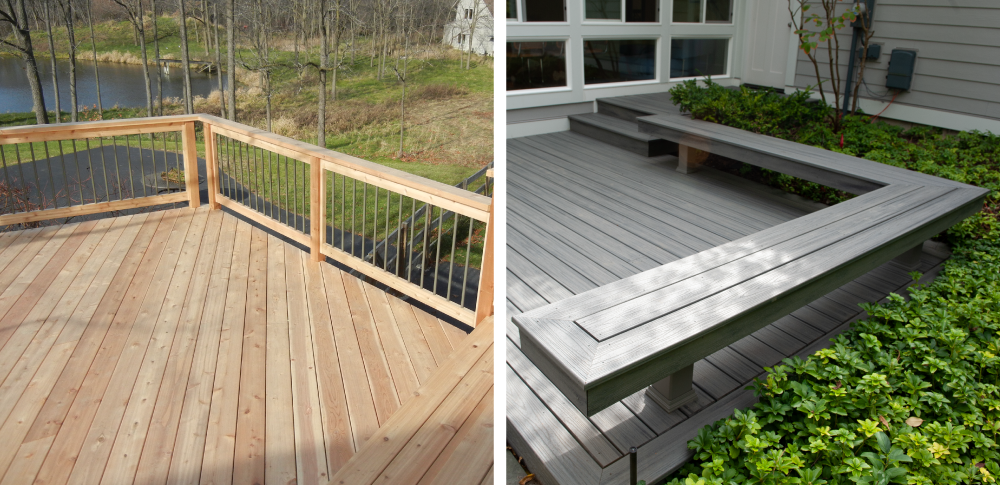
Composite vs. Wood Decks: Which Material Is Right for Your Ann Arbor Home?
Highlights from this article:
- Composite decking (like Trex or TimberTech) can cost more up front, but it rewards with low maintenance, strong warranties, and lasting good looks.
- Natural wood (pine, cedar, Ipe) costs less to start and offers authentic beauty, but requires regular staining, painting, and sealing to hold up over time.
- Both can last 25+ years. The difference is in the amount of upkeep along the way.
Skip down to the quick comparison table or the FAQs.
You’ve decided it’s time to build (or rebuild) a deck. Or perhaps you’re considering resurfacing and repairing an existing deck. Now comes the big question: What type of decking should I use? Composite or wood?
The two most popular choices are natural wood (pine, cedar, Ipe) or composite decking (like Trex, TimberTech or Deckorators). Both have genuine strengths and weaknesses. The right choice depends on your up front budget, how you live, how much maintenance you’re willing to do, and the importance natural wood may hold for the style and look of your home. Let’s walk through it together.
What Is Composite Decking? What is PVC decking?
Composite decking is an engineered product, often made from a blend of wood fiber and recycled plastics. PVC decking is extruded poly vinyl chloride (PVC) that is usually capped with a rigid, plastic shell. Trex and TimberTech are probably the best-known brands, but Deckorators is another excellent option we work with at Ann Arbor Decks. These engineered materials resist the things that shorten the life of a natural wood deck: moisture, UV exposure, insects, and everyday wear.
Composite deck boards hold their color and structure through Michigan’s wide seasonal swings, without the need to sand, seal or paint. All they require is simple cleaning with gentle soaps to last for decades.
What Are the Natural Wood Decking Options?
Wood decking comes in several varieties, each with its own character:
- Pressure-Treated Pine is the most budget-friendly and widely available option. It holds up well when properly maintained, making it a practical choice for homeowners who are cost-conscious upfront.
- Cedar is naturally resistant to insects and decay, and it has a beautiful, warm and knotty appearance that many homeowners love. It’s a step up in both price and aesthetics.
- Ipe (pronounced “ee-pay”) is a dense Brazilian hardwood that’s remarkably durable — often lasting 40 years or more with proper care. It’s one of the most beautiful decking materials available, with a rich, dark grain that can be maintained with oiling, or weather to a distinguished silver if left untreated.
One more thing worth considering: your yard’s sun exposure. Wood thrives in sunny, well-ventilated backyards where it can dry out after rain. In shady or consistently damp yards, wood stays wet longer — accelerating mold, warping, and decay. If your deck site doesn’t get much sun, composite (which is effectively waterproof) may be the smarter long-term choice.
Upfront Cost Comparison
The idea that composite always costs significantly more than wood deserves a closer look. Pressure-treated pine remains the most affordable decking option upfront. However, the large composite brands are making great strides when it comes to price competition.
Several composite lines (like Trex Enhance, for example) are priced in line with cedar, often coming in at a similar cost per square foot installed. When you add the fact that composite skips the annual maintenance bills that wood demands, the composite decking value proposition gets even more attractive.
The conclusion: While treated pine wins on upfront cost, composite and mid-grade wood are priced closer than most homeowners expect.
Maintenance
This is where composite really earns its reputation. A Trex or TimberTech deck needs little more than an occasional wash with soap and water. Treated pine and cedar, on the other hand, must be cleaned, sanded, and re-stained or sealed every one to three years to prevent cracking, warping, and graying. Ipe (if not sealed) should be oiled. That’s real time and real money — year after year.
If you’d rather spend your weekends on your deck than working on it, composite is worth serious consideration.
Appearance
Natural wood has a warmth and authenticity that’s hard to replicate. If the organic beauty of real grain and texture matters deeply to you — especially with cedar or Ipe — wood may be your preference. Also, wood can be painted any custom color you choose, unlike composite deck boards, which can’t be painted.
Composite manufacturers have made enormous strides in mimicking natural wood grain, and today’s composite options are genuinely attractive. But they aren’t quite the same as the real thing. Some lines of composite decking feature deeper and more obvious wood grain texture, and some feature smoother grains. Both are popular, but current trends seem to favor the smoother, more neutral colors of composite decking.
Longevity
A well-maintained composite deck can last 25 to 30 years. A quality wood deck, properly cared for, can last just as long — but the properly cared for part is where many homeowners find the gap. In Michigan’s climate, neglected wood decks deteriorate faster than you’d expect.
Warranty Coverage
Composite decking backs its promises with manufacturer warranties. Trex covers fading, staining, and material defects for 25 years, and TimberTech offers comparable protection (30 year limited warranty) on its premium lines. TimberTech’s PVC lines (which are 100% plastic) have 50 year fade and stain warranties.
Natural wood carries no manufacturer’s warranty from Mother Nature.
So Which Should You Choose?
There’s no single right answer — but here’s a simple way to think about it:
- Choose composite if you want a low-maintenance, long-lasting deck that looks great year after year without much effort on your part. It’s an especially smart choice for families with young children, dog owners, or anyone who simply wants to enjoy their deck rather than maintain it.
- Choose wood if you love the natural character of real timber, want to keep upfront costs lower, or are drawn to the distinctive beauty of a material like Ipe or cedar. Just go in with clear eyes about the maintenance commitment — it’s manageable, but it’s real.
Quick Comparison: Composite vs. Wood
| Composite (Trex / TimberTech) | Natural Wood (Pine, Cedar, Ipe) | |
|---|---|---|
| Upfront Cost | Higher | Lower |
| Maintenance | Very low — occasional cleaning only | Regular staining/sealing required every 1–3 years |
| Appearance | Realistic wood look; consistent color | Authentic natural grain and warmth; can be painted any color |
| Longevity | 25–30 years | 25+ years with proper care (Ipe 40+ years) |
| Warranty | 25-year manufacturer warranty (varies by brand/line) | None |
| Splinter Risk | None | Possible over time without maintenance |
| Best For | Low-effort ownership; families; Michigan weather resilience | Natural aesthetics; lower upfront budget |
Frequently Asked Questions
Is composite decking really worth the higher upfront cost?
For many Ann Arbor homeowners, yes — especially when you factor in the long-term picture. Composite decking eliminates the annual maintenance costs of staining, sealing, and sanding that wood requires. When you add up those recurring expenses over 10 or 15 years, the upfront price difference often narrows considerably. Entry-level composite lines like Trex Enhance are also competitively priced with cedar, so the gap may be smaller than you expect from the start.
How long does a composite deck last compared to a wood deck?
A quality composite deck typically lasts 25 to 30 years. A well-maintained wood deck can last just as long — but the emphasis is on well-maintained. In Michigan’s climate, where freeze-thaw cycles, humidity, and heavy snow loads stress outdoor structures, wood that doesn’t receive consistent care tends to deteriorate fast.
Which wood species holds up best in Michigan’s climate?
Pressure-treated pine is the most affordable choice and performs well with consistent maintenance. Cedar and Ipe both perform well in Michigan’s conditions. Cedar’s natural oils resist insects and moisture, making it a durable mid-range option. Ipe is exceptionally dense and hard — it handles Michigan winters admirably — but it requires occasional oiling to maintain its appearance and prevent surface cracking.
Can I add composite decking to an existing wood frame?
In many cases, yes. Composite decking boards can be installed over an existing pressure-treated frame, provided the frame is structurally sound and the joist spacing meets the composite manufacturer’s specifications. An on-site assessment is the best way to determine whether your existing framing and footings are a good candidate for resurfacing — something we’re happy to evaluate during a free consultation.
Does my backyard’s sun exposure really affect which material I should choose?
More than most homeowners realize. Wood decks in shady, damp yards stay wet (or snowy) much longer, which accelerates mold, warping, and decay. If your deck site doesn’t get much direct sun, composite is likely the smarter long-term investment — it handles moisture far more reliably than natural wood.
We’ll Help You Find Your Answer
At Ann Arbor Decks, we’ve been building decks across Washtenaw County since 2006 — in pressure-treated pine, cedar, Ipe, Trex, TimberTech, Deckorators and more. We’ve seen how each material performs over time in Michigan’s specific climate, and we love helping homeowners match the right material to their lifestyle and budget.
Our on-site consultations are free, no-pressure, and typically take just 45 minutes. We’ll come to your home, listen to your vision, and give you a clear, honest picture of your options — including a detailed written quote.
Ready to start the conversation? Book your free estimate today.