

Under-Deck Drainage

Under-Deck Drainage: Doubling Your Outdoor Living Space on an Elevated Deck

Highlights from this Article:

  • An under-deck drainage system collects rainwater as it drains between deck boards and channels it away, keeping the area below the deck completely dry.
  • Ann Arbor Decks installs both Trex RainEscape and TimberTech DrySpace, two systems with meaningfully different installation approaches.
  • Trex RainEscape installs over the joists before decking goes down; it cannot be added to an existing deck without removing the boards. TimberTech DrySpace installs under the joists and can be retrofitted to most existing elevated decks.
  • Both systems protect the framing from moisture, extending the life of the deck’s structural components.
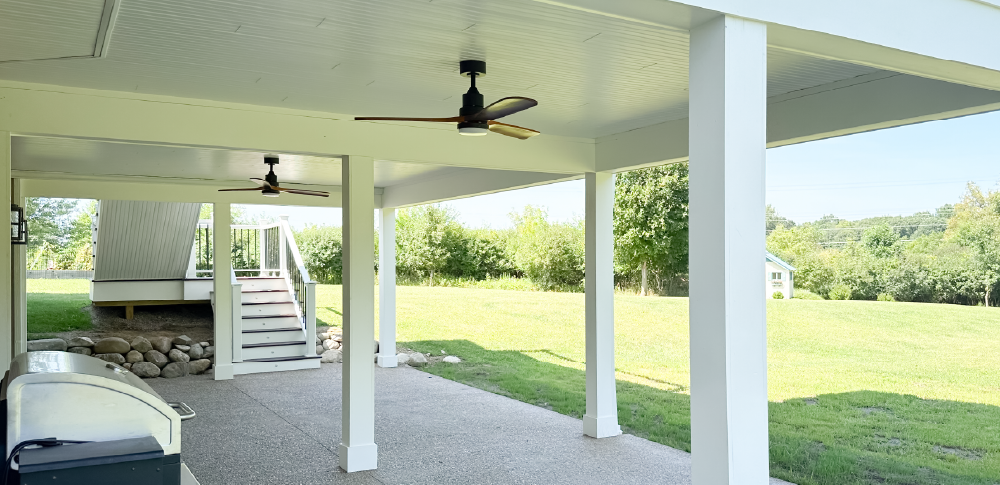
  • Once the drainage system is in place, the space below can be finished with a vinyl beaded ceiling, lighting, ceiling fans, or left open with the drainage system visible.

Skip down to the system comparison table or the FAQs.

Most homeowners don’t think much about what happens under their elevated deck when it rains. Water passes through the gaps between deck boards, drips onto the joists and framing, saturates the space below, and generally makes the area unusable during and after any precipitation. On a second-story deck over a walkout basement, that means a lower patio that’s wet and muddy whenever the weather turns. On a higher first-floor deck, it means a storage or entertaining area that gets rained on just as much as the surface above.

An under-deck drainage system changes that equation completely. Instead of letting water fall through onto everything below, the system catches it at the framing level and channels it away through a network of troughs, panels, and downspouts, leaving the space below clean, dry, and genuinely usable in almost any weather.

Why You’d Want Under-Deck Drainage

The most obvious reason is usability. A dry under-deck space is a legitimate outdoor room. Depending on the height clearance below your deck, it can accommodate outdoor furniture, a dining or lounge area, a grill station, an outdoor kitchen, a hot tub surround, or simply a protected storage area that stays dry year-round. In Michigan, where spring and fall weather can be unpredictable, having a rain-protected outdoor space extends the season meaningfully.

There’s also a structural benefit that often goes unmentioned. An over-the-joist drainage system (like Trex RainEscape) creates a barrier above the framing that keeps moisture off the joists and beams entirely. Pressure-treated lumber, even quality material, has a finite lifespan when it’s repeatedly wetted and dried over years of Michigan weather. A system that keeps the framing dry from the start can significantly extend the structural life of the deck. For a composite deck surface that carries a 25- to 50-year warranty, protecting the wood substructure that supports it is a worthwhile investment.

The Two Systems We Install

Trex RainEscape

Trex RainEscape is an over-the-joist system. Before the deck boards go down, a network of flexible HDPE troughs is laid across the top of each joist bay (the space between joists), and downspouts are positioned to carry water from the troughs down and away from the structure. Butyl tape seals all seams and surrounds fasteners to prevent any water from reaching the framing below. Once the drainage system is in place and tested, the deck boards are installed on top of it.

Because RainEscape sits above the joists, it creates a true moisture barrier for the entire substructure. The joists and framing never see rain at all. The system is available in brown or black to coordinate with the decking above, and Trex offers plug-and-play LED soffit lights that install directly into the RainEscape ceiling from below, making the lighting integration clean and straightforward.

The significant constraint of RainEscape is that it must be installed during the build, before decking goes down. It cannot be added to an existing deck without removing all of the deck boards first. For new deck construction, it’s an excellent system. For an existing elevated deck, it requires either a full resurfacing project (which gives us access to the joists) or a different approach altogether.

TimberTech DrySpace

TimberTech DrySpace takes the opposite approach. Instead of sitting above the joists, DrySpace installs beneath them, attaching to the underside of the deck framing from below. The system uses interlocking V-shaped vinyl panels that snap into brackets secured to the joists, creating a sloped drainage surface that channels water away from the house. The pitch of the system (1/8 inch per foot) ensures consistent drainage toward the gutter or downspout at the perimeter.

The key advantage of DrySpace is that it can be installed on most existing elevated decks without removing a single deck board. As long as there is access from below (which is nearly always the case on an elevated deck), DrySpace can be retrofitted to the existing framing. This makes it the right choice for homeowners who already have an elevated deck in good structural condition and want to add drainage and a finished ceiling without undertaking a full resurfacing project.

DrySpace is made of solid extruded vinyl, is available in Bone and White, and comes with a 25-year limited warranty. The system works with 12-inch and 16-inch on-center joist spacing. It is designed to work with an external gutter at the perimeter to carry water away from the structure.

Can You Add Drainage to an Existing Deck Without Removing the Boards?

Yes, but only with the right system. This is one of the most common questions we get on this topic, and the answer depends entirely on which system you’re considering.

Trex RainEscape requires access to the tops of the joists, which means the deck boards have to come off. If your existing deck is due for a resurfacing anyway (the boards are worn, the surface is tired, or you’re ready for composite), a resurfacing project combined with RainEscape installation is a natural pairing. We access the joists during the resurfacing, install RainEscape before the new boards go down, and you end up with both a new deck surface and a fully functioning drainage system in one project.

TimberTech DrySpace, by contrast, is specifically designed for both new and existing decks. It installs entirely from below. If your deck structure is sound and you’re happy with the surface, DrySpace can be added without disturbing a single board above. We assess the framing from below, confirm the joist spacing and structural condition, and install the system from the underside. This is the practical path for most existing decks where a full resurfacing isn’t otherwise warranted.

Trex RainEscape vs. TimberTech DrySpace at a Glance

Trex RainEscapeTimberTech DrySpace
Installation positionOver the joists (above framing)Under the joists (below framing)
New deck installationYesYes
Existing deck retrofitOnly if deck boards are removedYes, without removing deck boards
Protects framing from moistureYes (complete barrier above joists)Partial (water still contacts joists before draining)
MaterialHDPE trough and downspout system with butyl tape sealingSolid extruded vinyl V-panels with bracket system
ColorsBrown or BlackBone or White
Integrated lighting optionYes (Trex plug-and-play soffit lights)Via finished ceiling added below
Warranty25 years25 years

Finishing the Space Below

Once the drainage system is in place, you have choices about how to finish the underside of the deck. The right approach depends on how you intend to use the space, how much you want to invest in finishing, and personal preference.

Leave the Drainage System Exposed

Both RainEscape and DrySpace are reasonably clean-looking systems. RainEscape’s brown or black troughs, viewed from below, give the ceiling a structured, industrial-adjacent look that some homeowners find appealing as-is. DrySpace’s white or bone vinyl panels create a clean, light-colored surface that reads almost like a simple ceiling without any additional finishing. For storage areas or utilitarian spaces, leaving the drainage system visible is a perfectly practical choice that keeps costs lower and installation simpler.

Vinyl Beaded Ceiling

For a more finished look (particularly in spaces intended for outdoor dining, lounging, or entertaining), a vinyl beaded ceiling installed below the drainage system is the most popular upgrade. Beaded vinyl ceiling panels give the under-deck space the feel of a covered porch, with a clean, consistent surface that hides the framing and drainage components completely. The combination of a drainage system above and a finished ceiling below creates what is effectively an outdoor room. Vinyl is the right material for this application because it won’t warp, rot, or absorb moisture the way wood would in an outdoor environment.

Lighting

A drainage system creates the infrastructure for safe under-deck lighting, since the ceiling area is dry and protected from above. Trex offers plug-and-play LED soffit lights that integrate directly with the RainEscape system; they install into the trough ceiling from below using spring clips and connect to Trex’s standard low-voltage system. For DrySpace installations, or where a vinyl beaded ceiling is added, recessed or surface-mounted outdoor-rated fixtures can be installed in the finished ceiling. Lighting transforms an under-deck space from a daytime-only storage area into an evening entertaining space and is one of the most impactful upgrades available at a relatively modest cost.

Ceiling Fan

On an elevated deck with reasonable clearance below (typically eight feet or more), a ceiling fan rated for damp or wet outdoor use can be mounted to the deck framing or a finished ceiling below. In Michigan summers, a ceiling fan makes a significant difference in comfort, particularly in humid weather or in south- and west-facing spaces that collect afternoon heat. If a ceiling fan is part of your plan, electrical rough-in needs to be coordinated during the construction phase. This is one of those details that is straightforward to plan for during the build and much more disruptive to add after the fact.

Frequently Asked Questions

Does my deck need to be elevated to use an under-deck drainage system? Yes, in a practical sense. These systems create a dry space below the deck, so there needs to be a meaningful “below” (a patio, walkout basement level, or storage area) that benefits from being kept dry. Ground-level decks don’t have this space and don’t need drainage systems for the same reasons. Elevated decks, second-story decks over walkout basements, and decks with significant clearance below are the right candidates.

How high does my deck need to be for an under-deck system to make sense? There’s no strict minimum, but practically speaking, a deck needs enough clearance for the space below to be useful. Five feet of clearance provides storage utility; seven or more feet opens up genuine living space with room for furniture, a fan, and lighting. We’ll assess the clearance during our consultation and help you determine whether a drainage system makes sense for your specific deck.

Will a drainage system change the look of my deck from above? Not with either system. RainEscape sits between and over the joists, invisible once decking is installed. DrySpace is installed entirely from below and has no effect on the deck surface whatsoever.

How does water exit the system? Both systems direct water to a gutter or downspout at the perimeter of the deck, which carries it away from the structure. RainEscape uses integrated downspouts built into the trough system; DrySpace directs water to a gutter attached at the perimeter. In both cases, the water exits in a controlled location rather than dripping randomly across the area below.

Can I add a ceiling fan to the under-deck space? Yes, provided there’s adequate clearance and electrical access. The fan needs to be rated for outdoor damp or wet locations, and the electrical wiring needs to be properly installed. We coordinate this through our electrician for projects where a fan is part of the plan. If you think you might want a fan at some point, it’s worth discussing during the design phase so wiring can be roughed in ahead of time.

Does under-deck drainage require a permit? Generally not for the drainage system itself, though finishing the space with electrical work (lighting, ceiling fan) does require an electrical permit. We handle permits for all work we perform on your project.

Planning Your Under-Deck Space

Whether you’re building a new elevated deck and want to incorporate drainage from the start, or you have an existing elevated deck and are ready to finally make use of the space below, we’d be glad to walk through the options with you on-site. We’ll look at your clearance, your joist spacing, your existing deck condition, and how you envision using the space, and give you a clear recommendation on which system makes the most sense.

Book your free consultation today. We serve Ann Arbor, Saline, Dexter, Chelsea, Pittsfield Township, Ypsilanti, and the surrounding Washtenaw County area.
Read more

Deck Lighting

Deck Lighting: A 2026 Guide

Highlights from this Article:

  • Deck lighting serves two core purposes: safety (illuminating stairs, edges, and transitions) and ambiance (extending the usability of your outdoor space into the evening).
  • There are various distinct light types for decks, each suited to different locations and effects. A well-designed lighting plan typically combines several of them.
  • Low-voltage transformer systems are the most reliable and flexible option for most decks. Solar and battery systems have a place but come with trade-offs.
  • Trex and TimberTech both offer deck and rail lights. Feeney DesignRail and Westbury Rail (Magena Star) each offer integrated lighting systems designed to coordinate with their railing products.
  • If you wish, the Ann Arbor Decks design team will offer a complete lighting package as part of your deck proposal. It’s a separate line item, fully customizable, so you know exactly what you’re getting and what it costs.

Skip down to the lighting system comparison or the FAQs.

Well-designed deck lighting is really important in Michigan. Let’s face it: the Mitten State can get dark early, and we need more lighting to extend our enjoyment of our decks. It’s also easy to underestimate how much the right lighting can make a deck safer while adding to the ambience. Deck lighting does very practical work: it marks stair edges, defines the perimeter of the deck, and helps guests move safely in unfamiliar spaces after dark. Safety and aesthetics aren’t competing goals in deck lighting; they’re usually achieved by the same fixtures.

This post covers the available light types, how the major system configurations work, the most popular brands we install, and what to think about as you approach the design conversation.

Types of Deck Lighting

Riser Lights

Riser lights mount into the vertical face of each stair tread and cast a downward wash of light across the step below. They’re one of the most functional lighting choices on any deck with stairs, making each tread visible after dark without creating glare. They’re also durable by design; these fixtures are built to handle foot traffic in close proximity and hold up through Michigan winters without issue. If your deck has stairs and you’re adding any lighting at all, riser lights are usually the starting point.

In-Deck Lights (Recessed Deck Lights)

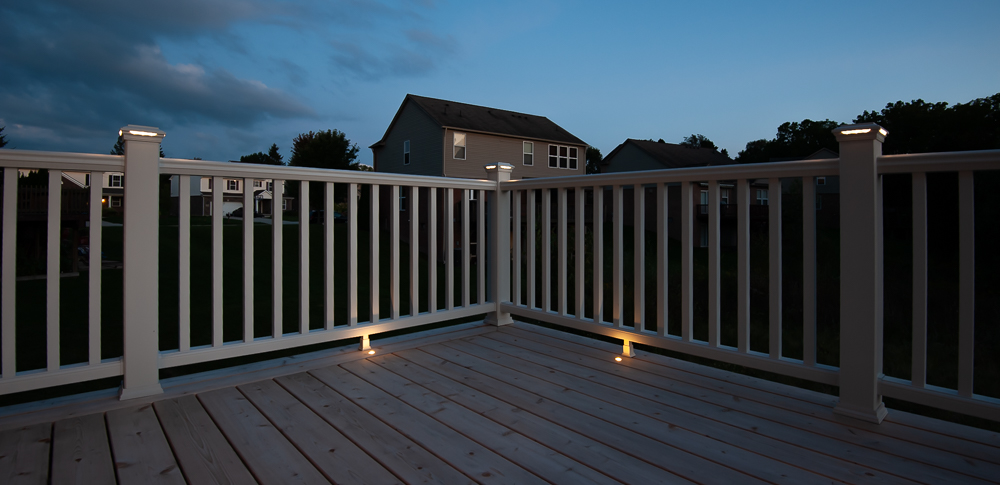
In-deck lights are mounted flush with the surface of the deck boards themselves, producing a soft ambient glow at ground level. They’re commonly used to define the perimeter of a deck (especially when there’s no railing), line a pathway, or accent a specific area like a sunken hot tub or fire table surround. Because they sit low and cast light outward and upward, they add a warm, layered quality to a deck’s evening atmosphere. They can also be used in stair treads as an alternative or complement to riser lights.

Post Cap Lights and Post Side Lights

Post cap lights sit atop railing (newel) posts and cast a warm glow in all directions, illuminating the deck and surrounding yard at a comfortable height. They’re one of the most visually prominent lighting elements on a deck and are often the anchor of a lighting scheme. Post side lights (sometimes called accent lights) mount to the face or side of a post rather than the top, directing light downward along the post and onto the deck surface below. Both types are available to match most railing post profiles and powder-coat colors. Lighted rail posts or rail caps are often used to mark out the two posts at the top or bottom of a set of stairs.

Under-Rail Lights

Under-rail lights mount into the top or bottom rail of a railing system, running along its length and casting a soft downward light onto the deck. They’re a linear, clean, architectural lighting element, and they work particularly well on longer rail runs where you want a consistent, defined glow along the railing. Not all railing systems allow for this style of rail lights. Feeney DesignRail allows for top and bottom rail lighting with their horizontal cable rail systems, so that’s a popular choice for many homeowners. It’s even possible to integrate lighting into natural wood top rails (like Ipe or cedar).

Custom Options: Task Lighting, Safety Floodlights, and Sconce Lighting

Beyond the standard deck lighting menu, there are custom options worth discussing for the right project. Task lighting (directional fixtures focused on a grill station, outdoor kitchen, or work surface) makes a covered cooking area genuinely functional after dark rather than just atmospheric. Safety floodlights on the house wall or an overhead structure can illuminate a larger area for security or practical use. Sconce lighting mounted to a privacy wall, pergola post, or house exterior adds an architectural quality that standard deck lights don’t provide. These options work best when they’re planned into the design from the start, not added afterward.

Ceiling Fans with Lights (Covered Decks and Porches)

If your deck is covered (a solid-roof pergola, a screened porch, or a roof-covered deck), a ceiling fan with an integrated light is one of the most practical investments you can make. In Michigan summers, the fan extends comfortable outdoor time by several degrees, and the overhead light provides broad, even illumination that railing-level fixtures can’t replicate. For covered outdoor spaces, this is the one lighting fixture we’d consider close to essential.

Lighting System Configurations

Low-Voltage Transformer Systems

The large majority of deck lighting we install runs on low-voltage (12V DC) transformer systems. A transformer plugs into a standard outdoor outlet and steps the household current down to a safe, low-voltage level that powers all the deck lights through a network of run wires. The benefits of this approach are significant: consistent, reliable light output regardless of weather or season, the ability to run multiple light types on one system, dimming capability, and timer or smart control integration. Installation requires some planning (wire runs need to be routed during the build for the cleanest result) but the performance over the life of the deck is hard to match.

Both Trex and TimberTech require their own branded transformers for warranty compliance, and their systems are designed as integrated ecosystems. Westbury’s Magena Star lighting system similarly uses a dedicated transformer and wiring system matched to their railing products. These transformers often feature dusk/dawn timers, remote controls, and other handy options.

The main limitation of a low-voltage system is that it requires an accessible outdoor outlet. If your deck doesn’t have one nearby, that’s no problem. We can factor adding one into the project scope and budget.

Solar Lights

Solar post cap lights and solar riser lights are a legitimate option for homeowners who want a simple, low-commitment lighting addition without running any wire. They charge during the day and activate automatically at dusk. Trex offers a solar option that’s popular for customers who require just a few post cap lights in a location that gets good daytime sun exposure.

The honest trade-offs: solar lights are dependent on sun exposure and perform noticeably less well on overcast days or in shaded yards, both of which are common in Washtenaw County. Light output is generally dimmer than low-voltage systems, and performance degrades as the battery ages over several years. For a primary lighting scheme, we’d steer most homeowners toward a transformer system. For a secondary accent or a location where running wire is genuinely impractical, solar is a reasonable choice.

Battery-Powered Systems

Battery-powered lights offer flexibility in placement (no wire runs, no outlet required) and are useful for accent locations or temporary setups. The limitations are similar to solar: output is lower than transformer systems, and the ongoing cost and inconvenience of battery replacement adds up over time. For permanent deck lighting, batteries are best treated as a supplement to a transformer system rather than the primary approach.

Lighting System Comparison

Low-Voltage TransformerSolarBattery
Light outputConsistent, dimmableVariable (weather-dependent)Moderate, declines as battery drains
InstallationRequires wire runs and outletNo wiring neededNo wiring needed
Ongoing costLow (minimal electricity)Low (battery replacement over time)Ongoing battery cost
Best forPrimary lighting schemeAccent or low-priority locationsSupplemental or temporary
Performance in cloudy weatherUnaffectedReducedUnaffected until battery drains
Smart controls / dimmingYes (with compatible transformer)LimitedLimited

Brands We Install

Trex Outdoor Lighting

Trex’s lighting line covers a wide range of deck light types: riser lights, recessed in-deck lights, rail post accent lights, and post cap lights (including a solar cap option). All Trex lighting uses long-life Cree LEDs and runs on a 12V DC transformer system. A standout feature is the Trex LightHub plug-and-play connection system, which allows lights to be connected without splicing wires, making installation cleaner and more DIY-accessible than most systems. Trex lighting is designed to integrate visually with their composite decking and railing lines and is available in Charcoal Black, Classic White, and Bronze. If you’re building with Trex decking and railing, their lighting system is a natural fit for a cohesive finished look.

TimberTech Lighting

TimberTech’s lighting system, marketed under the DeckLites name, includes post cap light modules, in-deck lights, riser lights, under-rail lights, and accent lights. The system runs on 12V low-voltage and includes dimmable, Instant On fixtures with a 5-year limited warranty. A notable feature is the under-rail light, which produces a clean, hidden downlight effect between balusters that works particularly well with TimberTech’s Impression Rail systems. TimberTech’s lighting requires their branded transformer or PowerPack for warranty compliance. The product line is available in Matte White, Matte Black, Matte Espresso, and Architectural Bronze, coordinating well with their railing color palette.

Westbury (Magena Star) Lighting

Westbury’s lighting offering is the Magena Star line, produced by Digger Specialties and designed specifically to match Westbury aluminum railing in both form and finish. Magena Star includes low-voltage post cap lights, post side lights, and riser lights, all powder-coated to coordinate with Westbury’s railing colors and textures. The system uses a dedicated transformer and easy-plug wiring, and is available in both low-voltage and solar configurations. Because Westbury railing posts use a consistent 3-inch exterior profile, lighting components fit cleanly without adaptation. If your project includes Westbury aluminum railing, Magena Star is the logical lighting companion.

Feeney DesignRail Lighting

Feeney DesignRail–a customer favorite for its horizontal cable rail–offers modern, clean-lined under rail lighting strips that call out the deck’s perimeter with a subtle glow. Their 24V “Wet location” strip light has a weatherproof housing, and it features dimming capability. Feeney also offers side post lights (“accent lights”) that are wet rated and feature a beautiful, glowing 108 lumen output. The Feeney lighting options can be matched exactly to the railing finish options, including their custom colors.

What to Think About When Designing Your Lighting

A few considerations that help guide the design conversation:

Start with safety, then add ambiance. Steps and deck edges (especially for decks that have no railing) are the non-negotiable starting points. Riser lights on every stair run and some form of perimeter or post lighting to define the deck edge should be the baseline. From there, in-deck lights, under-rail lighting, and accent fixtures add atmosphere.

Think about how you use the deck. A deck used primarily for quiet evening dining has different lighting needs than one used for gatherings of twenty people. A cooking area benefits from task lighting. A hot tub surround benefits from perimeter in-deck lights. Knowing how you actually live in the space shapes the lighting design more than any other factor.

Plan the wiring during the build. Lighting added to an already existing deck almost always involves some compromise in wire routing. When lighting is planned from the start, wire runs can be hidden within the framing and posts for a completely clean result. In addition, an outdoor plug can be placed in the most useful location. If you’re building a new deck or resurfacing an existing one, the time to think about lighting is before the new deck boards go down (or the railing goes up).

Consider your yard’s sun exposure for solar. Shaded yards and overcast Michigan winters make solar a less dependable primary lighting system than in sunnier climates. This is worth factoring in early rather than discovering after installation. In Michigan, it’s a good idea to opt for wired lighting whenever possible.

Match your lighting to your decking and railing system. Each of the brands we install has a lighting line designed to coordinate with its own railing in both color and profile, so keeping the deck lighting within the same brand ecosystem as your railing is the way to go. If your deck doesn’t need any railing, we usually–but not always–propose a lighting system that’s of the same brand as your decking. If we’re installing a wood deck or wood railing, we may suggest one of a number of lighting systems to you.

How Ann Arbor Decks Approaches Lighting Design

Deck lighting is something we think about as part of the overall design, not as an afterthought. When we put together your proposal, a lighting package is included as a separate line item. That means you can see clearly how many lights we’re recommending, what types, and what the cost is, and you can adjust that package as you see fit. Want to add riser lights but skip the in-deck perimeter? We can do that. Want to upgrade to a full integrated system with dimming controls? We can do that too. The goal is a lighting plan that fits your deck, your yard, and your budget, built from the ground up to work with the materials you’ve chosen.

If you’re designing a new deck or wondering whether lighting makes sense for an existing one, we’re glad to walk through the options with you on-site.

Book your free consultation today. We serve Ann Arbor, Saline, Dexter, Chelsea, Pittsfield Township, Ypsilanti, and the surrounding Washtenaw County area.

Frequently Asked Questions

Does deck lighting require an electrician? Low-voltage transformer systems operate at 12V DC, which is well below the threshold requiring licensed electrical work for the lighting components themselves. The transformer plugs into a standard outdoor outlet. If you don’t have an outdoor outlet where you need one, adding one does require a licensed electrician and should be budgeted separately. We can help coordinate this if needed.

How many lights does a typical deck need? It depends heavily on deck size, configuration, and the type of lighting you want. A modest 300-square-foot deck with one stair run might have four riser lights, four to six post cap lights, and a handful of in-deck perimeter lights. A larger or more complex deck could have significantly more. The lighting package in your proposal will specify exactly what we’re recommending and why.

Can lighting be added to an existing deck? Yes, in most cases. The main consideration is wire routing. On an existing deck, wires may need to be surface-mounted in channels or run through existing post cavities rather than hidden within framing. The result is functional but sometimes less clean than lighting planned during a new build. We’ll tell you honestly what’s achievable on your specific deck during a consultation.

Do deck lights hold up in Michigan winters? Quality low-voltage LED fixtures are rated for outdoor use year-round and handle Michigan freeze-thaw cycles without issue. Trex and TimberTech lights use Cree LEDs in weather-resistant housings built for exactly these conditions. Solar lights in northern climates may underperform in winter months due to reduced daylight and sun angle, which is worth factoring into any solar decision.

What’s the difference between warm white and cool white LED lights? Warm white (around 2700-3000K color temperature) produces a soft, amber-tinged glow similar to incandescent light. It’s the more popular choice for residential decks because it looks inviting and relaxed, rather than clinical. Cool white (4000K and above) is brighter and more neutral, sometimes used in task lighting or commercial settings. Trex and TimberTech both use 3000K LEDs in their primary lighting products, which sit at the warmer end of the spectrum.

Read more

Deck Design Trends

2026 Deck Design Trends — and Our Opinions on Them

Highlights from this Article:

  • Several 2026 trends are genuinely worth paying attention to: mixed materials, built-in lighting, warmer color palettes, and minimalist railings all make good sense for Michigan homes.
  • Outdoor kitchens are popular for a reason, but they require careful structural planning and attention to design that allows for future flexibility.
  • Multi-level decks are having a moment — but we think they deserve more scrutiny than they’re getting. They cost significantly more and aren’t the right fit for every yard or budget.
  • The best deck is the one that suits your home, your yard, and how you actually live — not the one that was trending when you built it.

Skip down to the quick comparison table or the FAQs.

Every year, design publications and building industry sources publish their lists of what’s trending in outdoor living. Some of it is genuinely useful. Some of it is marketing dressed up as editorial. And some of it looks great in a photo shoot but raises real questions when you’re the one who has to build it, maintain it, and live with it through a Michigan winter.

We’ve been building decks in the Ann Arbor area since 2006. Here’s our take on what’s actually worth your attention in 2026 — and one trend we’d encourage you to think twice about.

Trend 1: Warmer, More Natural Color Palettes

Our take: We like this one.

The era of stark cool gray decks appears to be winding down. The 2026 color story in decking is trending toward warmer earth tones: cedar browns, soft tawny neutrals, driftwood-inspired hues, and warm wood-like finishes that complement natural landscaping rather than contrasting with it.

For Michigan homes, this makes a lot of sense. Our yards tend toward greenery, mature trees, and natural stone — and warm-toned decking integrates with that environment very gracefully. Trex, TimberTech, and other composite manufacturers have all expanded their warm-tone offerings, and the quality of the wood-grain texture simulation has improved considerably in recent years.

One practical note: lighter neutrals also tend to retain less surface heat in summer than very dark boards, which is worth keeping in mind if your deck gets direct afternoon sun.

Trend 2: Mixed Materials

Our take: One of our favorites.

Mixing decking materials (main decking in one color with picture-frame edges in a different color, composite decks with cedar pergolas or cedar privacy walls, or natural wood decks with composite or metal rails) is a trend we’re genuinely enthusiastic about.

Done well, mixing materials adds depth and visual interest without adding clutter, and it lets homeowners personalize a deck in ways that feel designed rather than default. Often, homeowners coordinate deck fascia with house trim color for a built-in look, while using a lighter color for the main deck to keep the surface cool, light and airy-looking. We still really love single-color decks, though, because they always look classic.

Trend 3: Minimalist Railings

Our take: Well suited to Michigan homes.

Clean, low-profile railing systems that preserve sightlines rather than interrupting them are having a strong moment in 2026 — cable railing, glass panels, and slim aluminum balusters that largely disappear from view. We think this trend suits Michigan homes particularly well.

Most of our clients have yards worth looking at: mature trees, gardens, open green space. A heavy traditional railing system cuts all of that into horizontal slices. Minimalist railing keeps the view intact and gives a deck a more open, airy feeling that suits the way people actually use outdoor space in warmer months.

If you’re interested in glass railing systems specifically, we published a detailed post on what to consider for Michigan’s climate — including airflow, hardware, and maintenance — which is worth reading before you decide.

Trend 4: Built-In Lighting

Our take: A smart long-term investment.

Low-voltage LED lighting integrated into rails and stairs has been growing for several years and shows no sign of slowing. In 2026, it’s becoming less of an upgrade and more of an expectation on mid-to-upper-range deck builds.

We think the trend has earned its momentum. Built-in deck lighting extends the usable hours of your outdoor space into evenings, improves safety on stairs and transitions, and adds ambiance that’s difficult to replicate with freestanding fixtures. The LED systems available today are energy-efficient, durable, and designed to handle Michigan’s temperature swings without issue. Transformers and remotes allow for automated features like turning the lights on at dusk and off at dawn, for instance.

For those looking to light up rail post caps with minimal fuss, Trex now offers a solar post cap light that needs no transformer or wiring system.

The time to plan for lighting is during the build, not after. Adding or moving an exterior electrical plug, running wiring and positioning fixtures is straightforward when the deck is under construction; retrofitting lighting into an existing deck may be considerably more involved. If you’re planning a new deck or a full resurfacing project, it’s worth a conversation about lighting at the design stage. We will design a lighting plan for you and include it as an optional line item on your project proposal.

Trend 5: Outdoor Kitchens

Our take: Great idea, but plan it carefully.

Outdoor kitchens — built-in grills, countertops, refrigerators, and prep areas — are consistently one of the most requested features in 2026 outdoor living design. We understand why. A well-executed outdoor kitchen turns a deck and patio into a genuine destination for entertaining.

Our measured note here: A fully equipped outdoor kitchen setup — stone or concrete countertops, appliances, cabinetry, and plumbing — means multiple immovable objects in your backyard space, so it does require an ample back yard. If you’re planning an outdoor kitchen, we suggest including only the features you absolutely know you will use for decades to come. A strong outdoor kitchen design also includes weather protection and a plan for security. Be prepared as well for the maintenance that an outdoor kitchen requires.

Trend 6: Multi-Level Decks

Our take: Proceed thoughtfully.

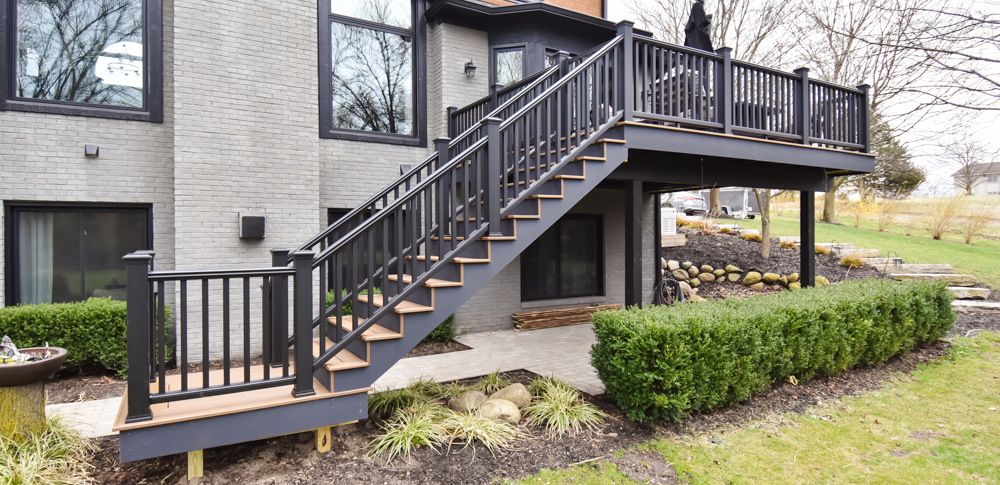
Multi-level decks — platforms at different elevations connected by steps, creating separate zones for dining, lounging, and entertaining — are being promoted heavily in 2026 design coverage as a way to add architectural interest and functional zones to a backyard.

There are situations where a multi-level deck is clearly the right answer: a yard with significant grade changes, a house with doors at different levels, or a need to create genuinely distinct outdoor rooms, for example.

However, if a well-designed single-level deck with thoughtful zoning (defined by furniture arrangement, a pergola, or a change in decking pattern) would serve you just as well, that’s often the smarter long-term investment. Just think about how many steps you can navigate holding a tray of drinks, or how your aging parents might handle the level changes when they come over for a party. You may also want to change the furniture or function at a later date, only to discover that the various deck levels are the wrong sizes for your new plans.

We’ll speak with you honestly about which approach makes more sense for your specific yard and goals. That’s a more useful conversation than simply following what’s in style.

Bonus Trend: Prefabricated Pergolas with Retractable Canopies

Our take: The trend nobody’s writing about — but should be.

You won’t find this one on many 2026 trend lists, but we’re seeing it consistently in our own work: more and more homeowners are adding prefabricated pergolas with retractable canopies to their decks, and the results are genuinely impressive.

The appeal is straightforward. A pergola with a retractable canopy gives you the best of both worlds — open sky when you want it, shade and weather protection when you don’t — without the permanence or cost of a full four-season room addition. Close the canopy on a clear, warm evening; draw it over when the afternoon sun gets punishing or a summer storm rolls in. For Michigan’s famously variable weather, that flexibility is genuinely valuable.

We can design and build a custom pergola for you. We’ve also been installing Trex Pergolas in particular and have been impressed with the product. The structures use a cellular PVC exterior wrapped around a structural aluminum core, which means they’re strong, low-maintenance, and won’t rot, warp, or split. The canopy systems — Trex offers both manual and motorized retractable options — come in a range of fabrics including Sunbrella and airflow mesh, with enough color choices to coordinate with most deck surfaces. The whole line is backed by a 25-year structural warranty, which is about as confident as a manufacturer gets.

A few things worth knowing if you’re considering one. First, the pergola needs to be sized and positioned relative to the deck during the planning phase — it’s much cleaner to integrate it as part of a new build or a resurfacing project than to add it afterward. Second, if you want built-in lighting or a ceiling fan (both available as add-ons for some Trex Pergolas), we can plan the electrical during the deck build rather than retrofitting it later. Third, a pergola adds a meaningful amount of wind load to the deck structure, so we assess the framing before installation on existing decks.

This is a trend driven by real homeowner behavior rather than design press coverage, which is often the best kind.

2026 Deck Trends at a Glance

Trend Our Take Best For
Warmer color palettes We like it Most Michigan homes and yards
Mixed materials One of our favorites Homeowners who want a personalized, designed look
Minimalist railings Well suited to Michigan Yards with views or greenery worth preserving
Built-in lighting Smart long-term investment Any new build or full resurfacing project
Outdoor kitchens Great, with caveats New builds or decks with sound structural framing
Multi-level decks Proceed thoughtfully Sloped yards or projects with generous budgets
Prefabricated pergola + retractable canopy Highly recommended Any deck where shade and weather flexibility matter

Frequently Asked Questions

Should I design my deck around current trends? Trends are a useful starting point for thinking about what you might want, but the best deck is the one that suits your home, your yard, and how you actually use outdoor space — not the one that was popular when you built it. We try to help clients separate the trends that have genuine staying power from the ones that may look dated in five years.

Are warmer deck colors harder to keep clean than gray? Not meaningfully. Modern composite finishes in warmer tones are engineered with the same stain and fade resistance as any other color in the lineup. The bigger practical variable is surface heat: very dark boards in full sun get noticeably hot underfoot in summer, which is worth considering regardless of the specific color.

How much more does a multi-level deck cost compared to a single-level deck? It varies by project, but as a rough orientation, a multi-level deck typically costs 20 to 30 percent more than a single-level deck of equivalent total square footage, due to the additional framing complexity, materials, and labor involved in each elevation change. The best way to understand the cost difference for your specific project is to get quotes for both options side by side.

Is built-in lighting something I can add later, or does it need to be planned from the start? It’s much more straightforward to integrate during the build. Running low-voltage wiring through posts and under the deck framing is simple when the deck is under construction; retrofitting it into an existing deck means opening up sections of the structure to route wiring, which adds time and cost. Also, you need an outdoor plug in a handy place for the lighting transformer. If a plug needs to be installed or moved, that’s best done before the deck frame goes in.

Let’s Design Something Worth Building

If you’re thinking about a new deck or a significant upgrade and want to talk through which 2026 trends make sense for your specific home and yard, we’d enjoy that conversation. Our free on-site consultations take about 45 to 60 minutes and come with no obligation.

Book your free estimate today. We’ll give you our honest read on what’s worth doing — and what isn’t.

Read more