

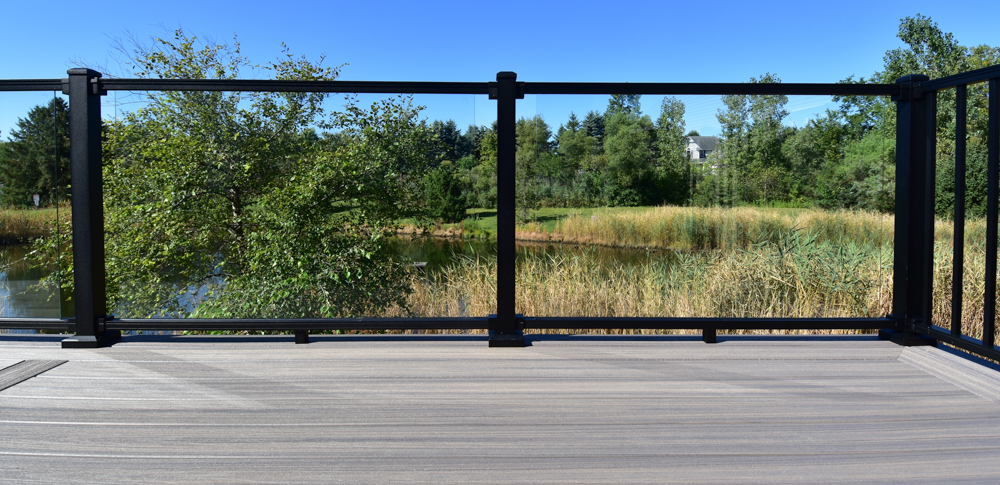
Glass Railing for Michigan Decks: Here’s What to Think About
Highlights from this Article:
- Glass railing offers unobstructed views and a clean, modern aesthetic, but it comes with real maintenance, airflow, and hardware considerations that matter in Michigan’s climate.
- Tempered glass is the standard safety choice for outdoor deck railings, but laminated glass (a much more expensive option), is sometimes recommended.
- Glass panels block airflow, which can make a deck feel warmer in summer. Mixing glass panels with other railing infill types (like balusters or cables) is a popular solution.
- Hardware, not glass, is typically the first thing to show wear in Michigan’s freeze-thaw climate. Quality matters here.
- Cost varies significantly depending on the system you choose. Fully frameless installations are the most expensive; aluminum-framed systems are more accessible.
Skip down to the cost overview or the FAQs.
There’s a reason glass railing has become one of the most requested upgrades in deck design. When it’s done well, it makes a deck feel larger, lighter, and more connected to the yard beyond it. If you have a view worth preserving (a wooded backyard, a garden, a waterfront), glass railing lets you keep it front and center.
Before you commit, there are practical questions worth thinking through, especially here in Michigan, where the climate puts outdoor materials through their paces year-round. This post walks through the most important ones.
Safety: What Makes Glass Railing Structurally Sound
The first question many homeowners ask is simply: is glass railing safe? The answer is yes, when it’s properly specified and installed. Here’s what that means in practice.
Tempered Glass
Tempered glass is the standard safety specification for deck railing. It’s been heat-treated to be significantly stronger than ordinary glass, and crucially, when it does break from a severe impact, it shatters into small, relatively harmless fragments rather than large dangerous shards. Building codes in Michigan, as in most states, require tempered glass for railing applications.
Laminated Glass
Laminated glass takes safety a step further. It consists of two glass layers bonded together with an interlayer (typically a plastic film) that holds the glass together if it breaks. Rather than shattering, a broken laminated panel tends to crack and hold its shape, which is particularly relevant for elevated decks, where a failed panel could be a falling hazard. Some installations use a tempered-laminated combination that delivers the strength benefits of both.
The Three Main Glass Railing Systems
At Ann Arbor Decks, we install three primary types of glass railing systems, each with a different aesthetic and price point.
Aluminum-Framed Glass Panels
Aluminum-framed systems enclose each glass panel in an aluminum frame which is hung between a top and bottom rail. They’re the most economical glass railing option and are very durable. Aluminum handles Michigan’s freeze-thaw cycles well and requires minimal maintenance. Framed glass is a great way to enjoy the view while still keeping that aluminum top rail to hold or lean on. The traditional posts also allow you to install lighted rail post caps. In our experience, this is the most popular choice for Ann Arbor area homeowners with elevated decks.
Trex Signature Glass — a framed glass rail system.
Semi-Frameless (Post-Mounted) Glass Panels
Semi-frameless systems use posts (typically aluminum or stainless steel) spaced at intervals, with glass panels fitted between them. You get most of the visual openness of a frameless system at a more accessible price point. The posts provide additional structural support and give the installation some flexibility in terms of panel sizing.
Trex Signature X Glass semi-frameless look.
Fully Frameless Glass Panels
Frameless systems use thick glass panels (typically 1/2 inch or more) anchored at the base with a metal shoe and on the sides with small clips. The result is the cleanest, most unobstructed look available, almost invisible from certain angles. Frameless systems are also the most expensive option and require precise installation to perform correctly. They work beautifully on elevated decks with views worth showcasing.
ViewRail’s Talon frameless system.
Michigan Climate Considerations
Michigan’s climate and glass railing: what to consider.
Airflow and Heat Retention in Summer
This is one of the most practical considerations that often surprises homeowners. Glass panels are solid barriers that block wind almost as effectively as a solid wall. On a warm Michigan summer afternoon, a deck fully enclosed with glass railing can feel noticeably hotter than one with open balusters or cable railing, because there’s no airflow coming through at railing height.
One approach we frequently discuss with customers: mixing glass panels with other railing types. For example, using glass on the sides of a deck where you want to block a neighbor’s sightline or a prevailing wind, while using cable or aluminum balusters on the sections that face your yard and view. This gives you the visual openness of glass where it matters most, without sacrificing cross-ventilation across the whole deck.
Pollen and Hard Water Buildup
Michigan springs are generous with pollen, and if your area has hard water (common throughout Washtenaw County), sprinkler overspray or rain splash can leave mineral deposits on glass panels. Plan for regular cleaning as part of your deck maintenance routine. Most glass panels can be cleaned with a standard glass cleaner and a soft cloth; avoid abrasive pads that can scratch the surface. Anti-spotting treatments and hydrophobic coatings (like Rain-X) are available for glass panels and are worth considering if low-maintenance is a priority for you.
Cost: What to Expect
Glass railing costs vary significantly depending on which system you choose. As a general orientation:
- Aluminum-framed glass is the most budget-friendly glass option and is competitive with mid-range traditional railing systems.
- Semi-frameless post-mounted glass sits in the mid-to-upper range, noticeably more than standard aluminum balusters, but delivering a premium aesthetic in return.
- Fully frameless glass is the most expensive option, reflecting both the thicker glass specification and the precision installation it requires.
The best way to understand what glass railing will cost for your specific deck is an on-site consultation. We’ll walk through the options with you and provide a clear, itemized quote so you can compare systems side by side.
Is Glass Railing Right for Your Deck?
At Ann Arbor Decks, we don’t steer customers away from glass railing. It’s a genuinely excellent product when it fits the situation. What we do is make sure you’re going in with a clear picture of what it involves, so the choice you make is one you’ll be happy with for years.
Glass railing tends to shine brightest when the deck has a view worth framing, when the homeowner is committed to occasional cleaning and maintenance, and when the system is specified with quality hardware suited to Michigan’s climate. When airflow is a concern, a mixed railing approach often delivers the best of both worlds.
Frequently Asked Questions
Is glass railing safe for homes with children or pets? Yes, when properly installed. Tempered glass is engineered to withstand significant impact, and the panels are anchored to meet building code load requirements. As with any railing system, installation quality matters. Panels need to be correctly secured and the system needs to meet local code for height and structural performance.
How do I clean glass railing panels? Standard glass cleaner and a soft microfiber cloth handle most cleaning needs. For hard water deposits or pollen buildup, a diluted white vinegar solution works well. Avoid abrasive scrubbers or steel wool, which can scratch the glass surface. Hydrophobic coatings (Think Rain-X) applied at installation can significantly reduce how often cleaning is needed.
Will glass railing make my deck feel hotter in summer? It can, particularly on decks that are fully enclosed with glass on all sides. Glass panels block airflow at railing height, which can make the deck feel much warmer on still summer days. Mixing glass panels with open railing sections on some sides of the deck is a practical way to preserve views while maintaining cross-ventilation.
How does glass railing hold up to Michigan winters? The glass itself is very durable in cold weather. Both tempered and laminated glass handle freeze-thaw cycles without issues. The hardware deserves more attention. Stainless steel and marine-grade aluminum components hold up significantly better than lower-grade hardware over years of Michigan winters. Ask about hardware specification when comparing systems.
Does glass railing require a building permit? Possibly. Railing replacement or installation sometimes requires a permit in local townships and municipalities. If a permit is required, Ann Arbor Decks will handle the permitting process for our installations, so you don’t need to navigate that yourself.
Can glass railing be added to an existing deck? Often yes, provided the deck’s existing framing and rim joists are in sound condition and can support the anchoring requirements of the glass system. We assess this during our on-site consultation. In some cases, minor framing reinforcement and some deck board replacement are needed before glass railing can be installed.
Let’s Talk Through Your Options
If you’re considering glass railing for your Ann Arbor area deck, we’d love to walk through the options with you in person. Our free on-site consultations take just 30 to 45 minutes. We’ll look at your deck’s configuration, talk through which systems make sense for your situation, and give you a clear, no-pressure quote.