
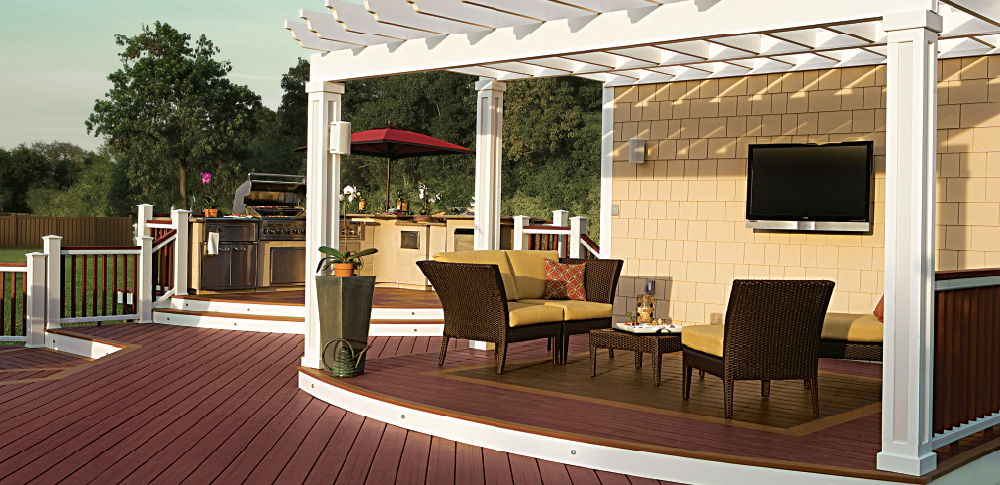
Building a Deck on a New Construction Home: What to Consider
Highlights from this Article:
- The earliest you should schedule a deck quote on a new construction home is once Tyvek is up — but waiting until the exterior is fully finished gives a much clearer picture of what you’re working with.
- You need a certificate of occupancy before a deck contractor can apply for a zoning approval or building permit. That typically means waiting until after closing.
- New construction soil is disturbed soil. Footings need special attention, and the relationship between your deck builder and your landscaper matters more than most homeowners expect.
- HOA requirements apply in virtually every new subdivision — and if you’re one of the first homes in the development, the builder may still be running the HOA during the Declarant Control Period.
- Getting HOA approval does not mean you’ve satisfied your builder’s warranty requirements. These are two separate things, and conflating them is a costly mistake.
- Think carefully about the long game: a deck that fits your life today may not fit your life in five years. The best time to plan for a gas line, a future pergola, or aging-in-place access is before the deck goes in.
Skip down to the FAQs.
Moving into a brand-new home is one of those moments where everything feels full of possibility. The lot is a blank canvas. A deck feels like the natural next step. Building a deck on a new construction home is absolutely doable, and in many ways it’s an ideal time to do it. But new construction introduces a specific set of considerations that don’t come up when you’re replacing an old deck on an established property. Here’s what we’ve learned from building decks on new construction homes throughout Washtenaw County.
When Can You Get a Quote, and When Can Work Begin?
No need to wait until construction is complete to start the conversation. Once Tyvek is up, we can begin discussing the project and work toward a preliminary design and cost estimate. We’ll want to revisit and confirm details once the exterior is finished. We need to see where HVAC condensers, dryer vents, water spigots, electrical meters, and other exterior penetrations are located, since all of these affect both where the deck can attach and what obstacles exist within the deck footprint. The ledger connection also can’t be fully evaluated until exterior cladding is on. Basement windows are easy to overlook at the quoting stage but matter for natural light, and a walk-around of the nearly-finished home sometimes changes a homeowner’s thinking on placement or design.
One courtesy worth extending: if the builder still has active crews on site, ask for the builder’s permission before arranging for your deck contractor to visit.
As for when installation can actually begin: not until you have your certificate of occupancy (CO). The CO is issued after the final municipal inspection of the home, typically around or after closing. Without it, a deck contractor can’t apply for the zoning approval or building permit needed to start work. The best move is to engage your deck contractor during the construction phase so the design and quote are ready to go the moment the CO is in hand.
Footings and New Construction Soil
New construction sites involve significant soil disturbance. Excavation disrupts natural compaction, and disturbed soil needs time to settle, which carries real implications for deck footings. Footings set in disturbed soil, or that don’t reach undisturbed native soil below, risk settling unevenly over time. A reputable deck builder working on new construction will account for this, either through ledger attachment (which reduces reliance on soil for structural support) or through footings properly sized and placed to extend below the disturbed zone.
It’s also worth coordinating with your landscaper early. The final grade of your yard may change significantly between when the deck is built and when landscaping is complete. Footings that work in the current grade can create problems if significant regrading happens around them later. We’re happy to connect you with landscapers and stonemasons we work with regularly if you’re planning a complete outdoor space.
HOA Approvals in New Subdivisions
Most new subdivisions are governed by an HOA, and virtually all HOAs require approval before a deck is added. What makes new subdivisions slightly unusual is the Declarant Control Period: when a subdivision is new enough that the developer hasn’t yet turned control over to homeowners, the builder effectively runs the HOA. If you’re one of the first households in the development, deck approvals are handled through the builder rather than a formal HOA board. Timelines and processes can be less predictable during this period. Ask your builder’s team directly so you’re not left waiting without knowing why.
Builder’s Warranty vs. HOA Approval
These are two entirely separate things, and conflating them is a costly mistake. The HOA evaluates aesthetics, setbacks, and community standards. Your builder’s warranty is a separate document with its own conditions; it doesn’t care what the HOA approved. Read your builder’s warranty carefully before any work is attached to the house, specifically the sections relating to alterations and additions. A properly flashed and detailed ledger attachment isn’t just better waterproofing; it’s also how you avoid a warranty dispute later.
Beyond the builder’s warranty, the deck itself should carry its own protection. Ann Arbor Decks backs every project with our 10-year workmanship warranty regardless of materials. As a TrexPro Platinum certified installer, we also offer Trex’s extended labor warranty (up to ten years when both Trex decking and railing are installed), which is only available through certified contractors.
Think About the Long Game
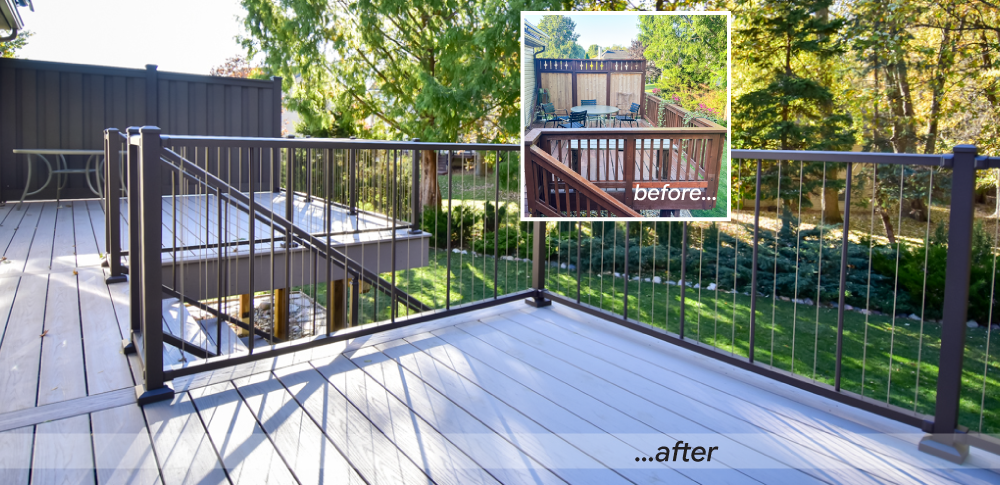
New construction is a moment when it’s easy to focus on immediate cost and easy to underweight the long-term math. A pressure-treated wood deck costs less today. It also requires staining every two to three years, is susceptible to the cracking and graying that comes with Michigan winters, and has a shorter replacement cycle. A composite deck costs more upfront, requires almost no maintenance, carries a longer warranty, and typically costs less in aggregate over fifteen or twenty years when you account for maintenance and eventual replacement. We think it’s worth running those numbers before defaulting to the cheapest build.
Design longevity matters too. A blank-canvas backyard won’t stay that way, and the deck you build at move-in should accommodate your life in five or ten years, not just today. A few questions worth sitting with before you finalize:
- What will your backyard eventually look like? Think about where a future patio, play area, or landscaping feature might go, and whether your deck’s footprint will work with that layout or fight against it.
- Is your family growing, or are you thinking about aging in place? Safety, handrail placement, gate locations, and traffic flow are much easier to address in the design than to retrofit later.
- What infrastructure do you want roughed in? A gas line stub-out for an outdoor kitchen, electrical circuits for lighting or a future hot tub, or structural allowance for a pergola: all of these are inexpensive to incorporate during construction and disruptive to add afterward. Now is the time to plan for them.
Frequently Asked Questions
Can I get a quote before the house is finished? Yes. Once Tyvek is up, we can begin the conversation and work toward a preliminary design and estimate. We’ll revisit and confirm the details once the exterior is complete.
Can the deck be built before I move in? Possibly, but not until after you’ve closed and received your certificate of occupancy. If you move quickly on the permit application after closing, there’s sometimes a window to get the deck underway or even completed before you’re fully settled in.
Do I need to tell my builder I’m adding a deck? You should at minimum review your builder’s warranty and understand any requirements around third-party work attached to the house. If the builder’s crews are still active on the lot, a courtesy heads-up before your deck contractor visits is always a good idea.
What if my HOA hasn’t been formally established yet? In subdivisions still in the Declarant Control Period, the builder functions as the HOA. Contact the builder’s team directly to understand the approval process and what documentation they require.
How do I make sure my deck doesn’t void my home warranty? Read your builder’s warranty document carefully, specifically the sections on alterations and additions. Ask your deck contractor how they handle ledger attachment and waterproofing to protect the existing structure. When in doubt, ask the builder directly before work begins.
Plan Early, Build Right
A deck built with your five-year life in mind, on a new construction home with a blank-canvas backyard, is one of the better investments you can make in that property. The planning conversation is worth having before the build, not after.
Book your free estimate today. We serve Ann Arbor, Saline, Dexter, Chelsea, Pittsfield Township, Ypsilanti, and the surrounding Washtenaw County area.